
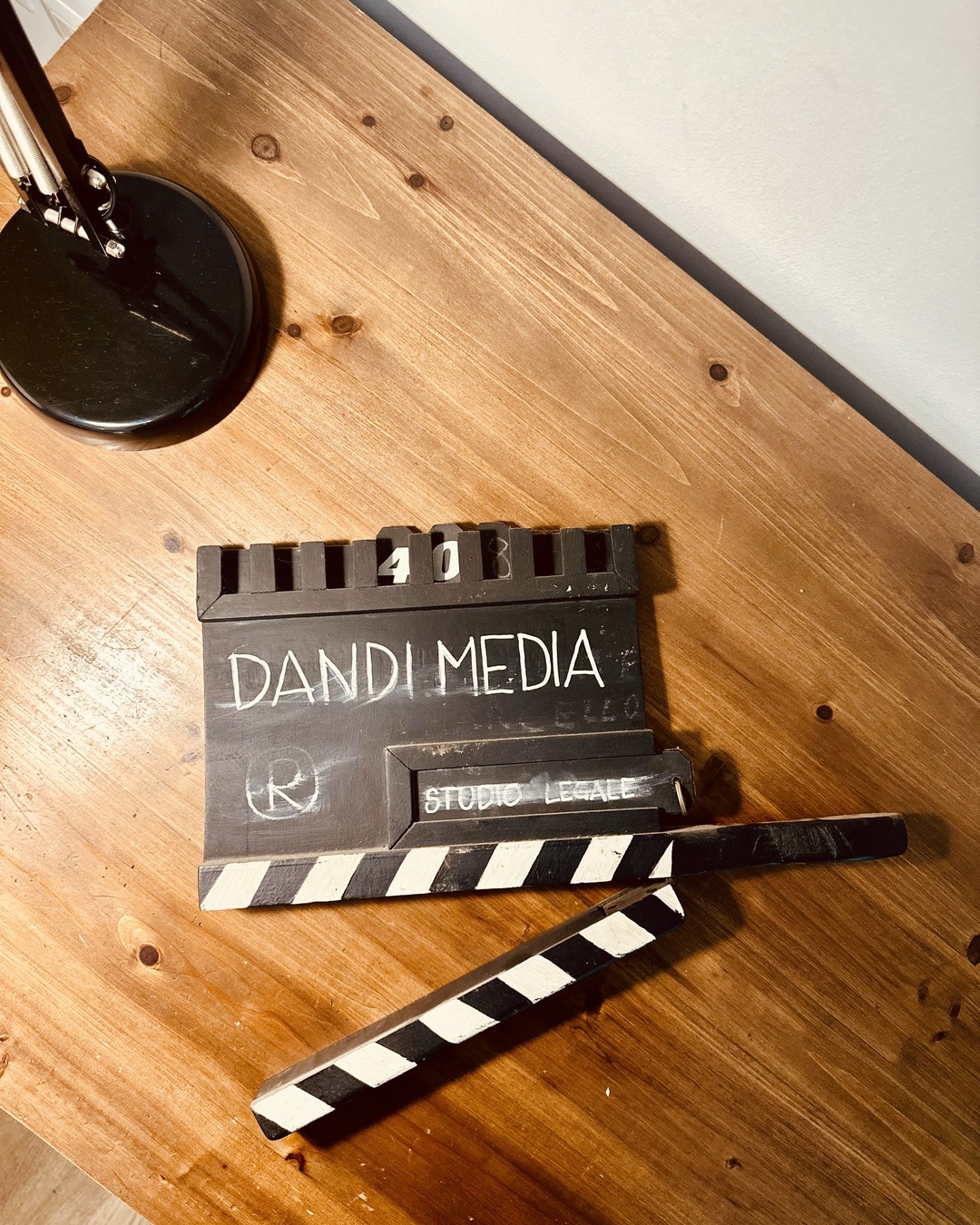
Do You Need an Entertainment Lawyer in Italy? A Practical Guide for Artists, Producers, and Creative Businesses
“Do I really need an entertainment lawyer, or can I get by with a general lawyer or just a careful read of the contracts?” It is one of the most common questions Italian artists, filmmakers, musicians, fashion brands, content creators, and production companies ask themselves — usually right before signing a deal that will affect them for years. The answer is rarely a simple yes or no: it depends on the project, the stakes, the counterparty, and the specific legal questions involved. This guide outlines the concrete situations where Italian entertainment law expertise is essential, and where a general lawyer (or no lawyer) is sufficient.
For the broader practice areas, see our film law practice page. For specific service packages, see DANDI’s legal packages.
In this guide
What an entertainment lawyer does in Italy
Italian entertainment lawyers combine general civil and commercial law with specialised knowledge of:
- Italian Copyright Act (LDA, Law 633/1941): with all subsequent amendments including DSM Directive transposition;
- Industrial Property Code (D.Lgs. 30/2005): trademarks, designs, patents;
- Cinema Law (L. 220/2016) and its implementing decrees (D.I. MiC-MEF 225/2024 and subsequent amendments);
- AVMS Directive transposition (D.Lgs. 208/2021) for audiovisual services;
- EU framework: EUTMR, Database Directive, Software Directive, AI Act, DSA;
- International co-production treaties: 39 Italian bilateral treaties plus the European Convention;
- SIAE, NUOVOIMAIE, AFI and other collecting society frameworks;
- AGCOM proceedings and Italian regulatory compliance;
- Italian tax credit and incentive frameworks;
- Italian and EU specialised IP courts and procedural specificities.
General lawyers, however competent, typically cannot provide reliable advice on this combination without substantial specialised training.
When you definitely need one
These situations warrant specialised entertainment law expertise:
- Any contract over €10,000: directors, screenwriters, composers, performers, distribution agreements, sales agent agreements;
- Italian tax credit applications: D.I. 225/2024 compliance requires specialised knowledge that general accountants and lawyers rarely have;
- Co-production structures: any cross-border production with EU, USA, Latin America, or Asian partners;
- IP portfolio strategy: trademark registration, copyright registration, defensive filings for famous brands;
- Disputes with broadcasters, distributors, or platforms;
- Counterfeit and IP enforcement: customs, AGCOM, civil and criminal action;
- AI and synthetic content questions: AI Act compliance, deepfake protection, training data licensing;
- Disputes with collecting societies: SIAE, NUOVOIMAIE, AFI;
- Image rights and personality rights claims: against unauthorised commercial use;
- Estate management for deceased creators: posthumous IP rights administration.
When it is optional but recommended
For these situations, specialised expertise improves outcomes but is not strictly required:
- Small commissioning agreements: low-value freelance work for which a generic template can suffice;
- Internal use licences: where rights remain within a small group of creators;
- Standard release forms: for participants, audience members, locations — standard templates work for most cases;
- Crowdfunding campaigns: where standard platform terms govern.
Even in these cases, a brief consultation can prevent later problems.
When you probably do not need one
Some situations do not require specialised entertainment lawyer involvement:
- Standard residential or commercial real estate;
- General employment for non-creative roles;
- Routine tax filings without entertainment-specific income;
- Personal matters unrelated to professional creative activity.
These belong with general lawyers, employment specialists, or commercialisti as appropriate.
Entertainment lawyer vs general lawyer
The key differences:
- Industry familiarity: entertainment lawyers know the standard deal structures, common terms, and negotiating norms in film, music, fashion, and digital sectors;
- Regulatory knowledge: tax credit, MiC certification, SIAE registration, AGCOM proceedings require specialised competence;
- Network: entertainment lawyers maintain relationships with producers, broadcasters, festival organisers, collecting societies, and international counterparts;
- International perspective: cross-border co-productions and distribution require comparative legal knowledge across multiple jurisdictions;
- Creative sensitivity: understanding the artistic and commercial logic of projects, not just the legal terms in isolation.
How to choose the right one
Practical criteria for selecting an Italian entertainment lawyer:
- Specialisation: clear focus on entertainment, IP, and copyright law — not entertainment as a side practice;
- Track record: completed projects in your specific sector (music, film, fashion, digital, gaming);
- Italian and international experience: for cross-border projects, demonstrated cross-jurisdictional capability;
- Direct partner contact: avoid firms where you are passed between junior associates without senior involvement;
- Clear fee structures: hourly, project-based, or retainer arrangements explained upfront;
- Cultural fit: comfort discussing creative and commercial decisions, not just legal mechanics;
- Festival and market presence: lawyers active at Berlinale EFM, Cannes Marché du Film, Venice, MIA Market, and similar events provide network value beyond pure legal advice.
How DANDI works with you
DANDI.media is a boutique Italian entertainment law firm with offices in Rome and Genoa. We work directly with founders, principal creators, executive producers, brand directors, and managing partners — no junior associate intermediation. We support:
- Italian and international producers, directors, writers, composers, performers;
- Fashion brands and luxury houses;
- Music labels, publishers, and artists;
- Streaming platforms and broadcasters;
- Production companies, agencies, and creative studios;
- Galleries, art foundations, and individual artists.
For consultation, book directly with Avv. Claudia Roggero or Avv. Donato Di Pelino.
Related guides
| Topic | Resource |
|---|---|
| Film Law Practice in Italy | /en/film-law-practice/ |
| Legal Services for Independent Film Producers | /en/legal-services-independent-film-producers/ |
| Music Law in Italy | /en/music-law-italy-international-artists-labels/ |
| Copyright Law in Italy and Europe | /en/copyright-law-italy-europe/ |
| Italian Film Tax Credits | /en/italy-film-tax-credits/ |
| International Film Co-Productions | /en/european-film-co-productions/ |
Dandi Law Firm provides legal assistance in several Practice Areas. Check out our Services or contact Us!