
McDonald’s EU Trademark Cases: From the MacCoffee Victory to the Supermac’s Reversal
McDonald’s holds one of the most extensive and aggressively-enforced trademark portfolios in the EU. The company’s “Mc” and “Mac” trademark family has produced two of the most instructive recent EU trademark decisions: the MacCoffee victory in 2016 (General Court, T-518/13), where McDonald’s successfully blocked a Singaporean trademark trading on the “Mac” prefix, and the Supermac’s reversal in 2019 (EUIPO Cancellation Division), where McDonald’s actually lost its EU registration for “BIG MAC” due to insufficient evidence of genuine use. Together, these cases illustrate the trademark family doctrine, Article 8(5) EUTMR reputation protection, and the genuine use requirements that even famous marks must satisfy.
For trademark reputation framework, see our taking unfair advantage guide. For genuine use requirements, see our Lambretta trademark case.
In this guide
The MacCoffee case (T-518/13)
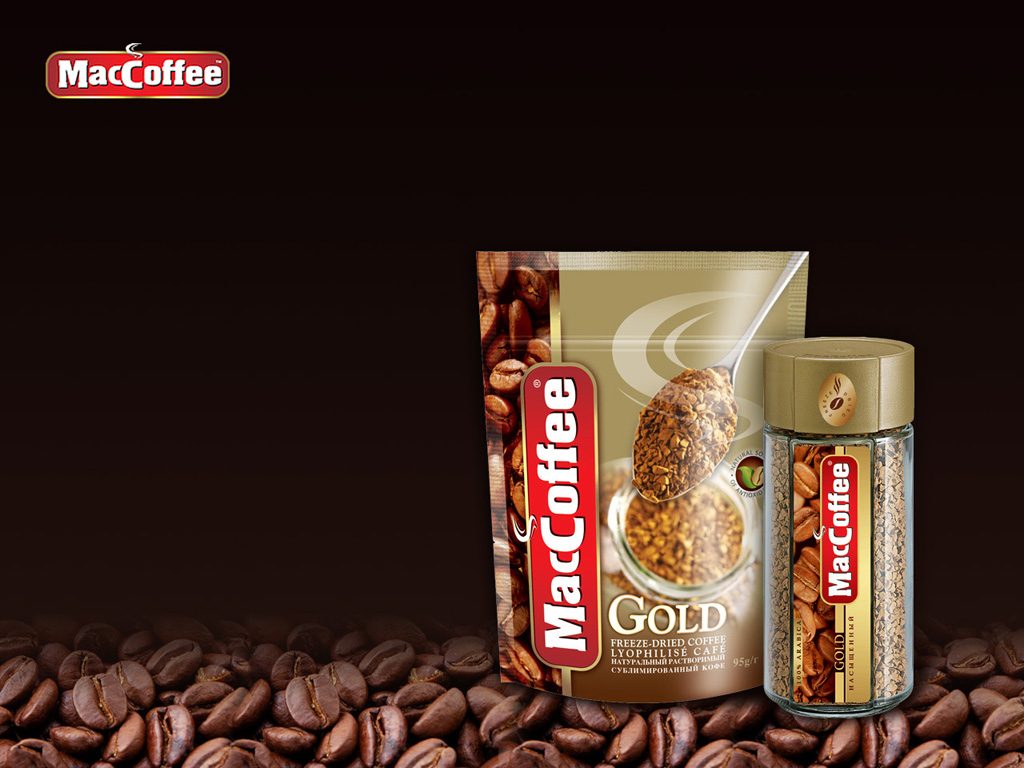
In Future Enterprises Pte Ltd v. EUIPO and McDonald’s International Property Co. Ltd. (Case T-518/13, judgment of 5 July 2016), the General Court (GC) upheld the EUIPO decision invalidating the EU trademark “MACCOFFEE”, registered in 2010 by Future Enterprises (a Singaporean company) for various coffee, tea, and beverage products. McDonald’s had successfully filed for invalidity in 2013 on grounds including Article 8(5) EUTMR reputation protection.
The General Court found:
- McDonald’s holds substantial reputation in the EU for fast food and related services;
- The “Mc” / “Mac” prefix forms part of a trademark family used by McDonald’s across multiple products (Big Mac, McChicken, McFlurry, McMuffin, etc.);
- The MACCOFFEE mark, while not directly resembling any specific McDonald’s mark, evoked the family aesthetic and created a mental link with McDonald’s;
- The use of MACCOFFEE for food-adjacent products (coffee, tea, beverages) would take unfair advantage of McDonald’s reputation by riding on the brand’s “power of attraction, reputation, and prestige”;
- The trademark was invalid for the contested categories.
The decision was a significant victory for McDonald’s and confirmed the EU’s robust protection of famous trademark families.
The trademark family doctrine
The MacCoffee case illustrates the trademark family doctrine: where a proprietor has registered multiple trademarks sharing a common element (here, the “Mc”/”Mac” prefix), the protection extends to cover the underlying brand structure, not just each specific registration in isolation.
Requirements for trademark family protection include:
- Multiple registered or used trademarks sharing the common element;
- Actual use of the family marks in the market;
- Public recognition of the common element as identifying a single commercial source;
- Reputation sufficient to support extended protection.
For McDonald’s, the family is robust: Big Mac, McChicken, McFlurry, McMuffin, McRib, McNugget, McCafe, plus the underlying McDonald’s mark itself. The combination establishes the “Mc”/”Mac” prefix as a McDonald’s brand indicator that EU law protects beyond the specific registered marks.
Article 8(5) EUTMR applied
The MacCoffee analysis applied Article 8(5) EUTMR (reputation/dilution protection) — the broader framework allowing famous marks to block applications across goods/services categories where the later mark would take unfair advantage or cause detriment. Key findings:
- McDonald’s reputation extends beyond fast food services to related food and beverage categories;
- Future Enterprises did not demonstrate “due cause” for using the Mac prefix for its products;
- The risk of consumer association was sufficient to engage protection — actual confusion is not required for Article 8(5) liability.
The case is a leading illustration of how Article 8(5) protects famous brands beyond their core categories. For full framework analysis, see our taking unfair advantage guide.
The Supermac’s reversal (2019)
Three years after the MacCoffee victory, McDonald’s suffered an unexpected reversal. The Irish fast-food chain Supermac’s Holdings Ltd (founded 1978) had been blocked from EU expansion by McDonald’s opposition to its trademark application. Supermac’s responded by filing for revocation of McDonald’s “BIG MAC” EU trademark registration for non-use under Article 58 EUTMR.
In its decision of 11 January 2019, the EUIPO Cancellation Division revoked the BIG MAC EU trademark for most categories, finding that McDonald’s evidence of genuine use was insufficient. The Division held:
- The evidence submitted (brochures, screenshots, affidavits from McDonald’s employees) lacked sufficient detail on actual use volumes, geographic scope, and dates;
- Internal company documents do not constitute objective independent evidence;
- The threshold for genuine use is not met by general assertions of use without supporting commercial documentation;
- Even famous marks must demonstrate genuine use through proper evidence — fame alone does not satisfy the requirement.
The decision was widely covered as a major upset, illustrating that even the most aggressive trademark holders can lose where procedural and evidentiary requirements are not satisfied. McDonald’s subsequently restored protection through new registrations and continued international expansion strategy, but the immediate Big Mac registration was lost.
Lessons on genuine use
The two cases together illustrate the EU trademark framework’s balance:
- Reputation protection is strong: famous marks (and trademark families) receive broad protection against opportunistic registrations (MacCoffee);
- Genuine use is mandatory: even famous marks must demonstrate ongoing commercial use through proper evidence (Supermac’s);
- Evidence quality matters: trademark portfolio management requires systematic documentation of actual market use, not just brand awareness;
- Smaller actors can succeed: well-prepared challenges can defeat even major trademark holders.
Italian application
The same principles apply under Italian trademark law:
- Italian Industrial Property Code (D.Lgs. 30/2005): Article 12 on conflict with earlier rights, Article 20 on protection scope including reputation protection paragraph (c);
- Genuine use requirements: parallel framework requiring active commercial use;
- Italian famous marks: Gucci, Ferrari, Bulgari, Prada, Lavazza, Barilla, Ducati, and other Italian famous brands benefit from reputation protection similar to McDonald’s framework;
- UIBM Italian filings: Italian national trademarks coexist with EU trademarks — see our coexisting trademarks guide.
How DANDI supports trademark owners
DANDI.media supports Italian and international trademark owners on portfolio strategy, enforcement, and defence:
- EUIPO and UIBM trademark portfolio management;
- Reputation documentation and trademark family strategy;
- Genuine use audits and evidence preparation;
- Opposition proceedings under Article 8(5) EUTMR;
- Revocation defence and evidence gathering;
- Trademark enforcement and counterfeiting response.
For consultation, book directly with Avv. Claudia Roggero or Avv. Donato Di Pelino.
Related guides
| Topic | Resource |
|---|---|
| Taking Unfair Advantage (Article 8(5) EUTMR) | /en/trademark-infringement-dilemma/ |
| Lambretta Trademark Case (genuine use) | /en/trade-mark-lambretta/ |
| Mr. Kebab vs Mister Kebap (likelihood of confusion) | /en/mr-kebab/ |
| Coexisting Trademarks (EU vs national) | /en/coexisting-trademarks/ |
| Brand Identity Legal Protection | /en/brand-identity/ |
| Trademark Enforcement Remedies | /en/taking-advantage/ |
Dandi Law Firm provides legal assistance in several Practice Areas. Check out our Services or contact Us!