

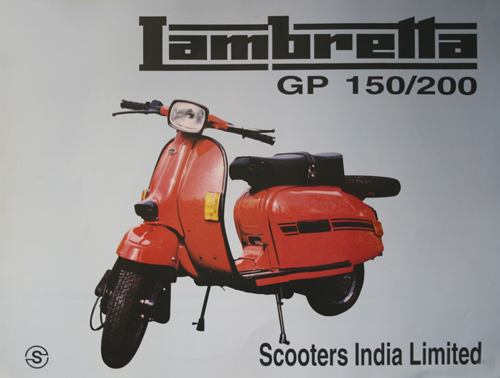
The Lambretta Trademark Case: Genuine Use and the Scope of Class Headings Under EU Trademark Law
The Court of Justice of the European Union decision in Brandconcern BV v EUIPO and Scooters India Ltd (Case C-577/14P, judgment of 16 February 2017) is a leading EU trademark case on two related questions: what counts as “genuine use” sufficient to maintain a registered trade mark against revocation, and how to interpret class headings from the Nice Classification when assessing the scope of registered goods. The case concerned the iconic Italian trademark LAMBRETTA — the name behind the post-war Italian scooter that became a global cultural symbol — and its protection across the Class 12 “vehicles; apparatus for locomotion by land, air or water” registration.
This guide explains the case, its doctrinal contribution, and its current relevance under the EU Trademark Regulation (now Regulation 2017/1001) and Italian implementation. For the broader copyright framework, see our master pillar guide to copyright law in Italy and Europe.
In this guide
The facts of the case
Scooters India Ltd was the proprietor of the EU trade mark LAMBRETTA, registered by EUIPO (then OHIM) on 6 August 2002 for, among other goods, “vehicles; apparatus for locomotion by land, air or water” in Class 12 of the Nice Classification.
In 2007, Brandconcern BV filed an application for revocation of the LAMBRETTA mark for lack of genuine use under what was then Article 51(1)(a) and (2) of Regulation 207/2009 (EUTMR). Scooters India provided evidence of use, but its evidence was limited to the sale of spare parts for scooters — not to vehicles or apparatus for locomotion as such.
The question crystallised: where a mark is registered for a broad Class 12 heading covering “vehicles; apparatus for locomotion”, does the sale of spare parts qualify as genuine use of the mark for those goods?
Cancellation Division and Board of Appeal
The EUIPO Cancellation Division partially upheld the application and revoked the LAMBRETTA mark for the Class 12 goods. The Board of Appeal dismissed Scooters India’s appeal, applying the so-called “literal approach” to class headings: since the evidence of use was limited to spare parts (not vehicles per se), and spare parts did not literally fall within the wording “vehicles; apparatus for locomotion”, genuine use of the mark for the registered goods had not been shown.
The General Court reversal
Scooters India appealed to the General Court (GC), arguing infringement of Article 51(2) EUTMR. The GC upheld the appeal and reversed the Board of Appeal. The GC’s reasoning: even if spare parts for scooters did not literally appear in the alphabetical list of goods in Class 12, the Board of Appeal had to examine whether genuine use of the mark had been shown for the many fittings and parts that did appear in the Class 12 alphabetical list.
The GC’s approach rejected the literal-heading approach in favour of a broader interpretation tied to the full alphabetical list of goods within the relevant Class.
The CJEU final decision
Brandconcern appealed to the Court of Justice (CJ), seeking annulment of the GC judgment. Brandconcern argued that the GC had improperly extended the IP Translator judgment to pre-IP Translator registrations.
The CJ dismissed the appeal on 16 February 2017. The Court’s key reasoning:
- The IP Translator judgment (Case C-307/10, 19 June 2012) established at paragraph 61 that applicants using class headings must specify whether the application covers all goods or services in the alphabetical list or only some of them;
- However, IP Translator concerned applicants for trade marks — not proprietors of already-registered trade marks;
- The rule set out in paragraph 61 of IP Translator therefore did not apply to the LAMBRETTA registration, which had been filed on 7 February 2000 — before the IP Translator judgment;
- For pre-IP Translator registrations using class headings, those headings should be interpreted as covering all goods in the alphabetical list of the relevant Class;
- The GC was therefore correct that “vehicles; apparatus for locomotion by land, air or water” in the LAMBRETTA registration covered all goods in the Class 12 alphabetical list — including the fittings and parts for which use had been shown.
The decision also upheld EUIPO’s prior practice on class headings, as reflected in Communications No 4/03 and No 2/12.
The IP Translator framework
IP Translator (Chartered Institute of Patent Attorneys v Registrar of Trade Marks, Case C-307/10, judgment of 19 June 2012) is one of the foundational EU trademark decisions on the scope of class headings. The CJEU held that:
- The Nice Classification must be sufficiently clear and precise;
- Applicants using class headings must specify the goods/services they intend to cover — either all goods/services in the alphabetical list of the class, or specifically identified ones;
- Class headings used without specification create scope uncertainty.
The combination of IP Translator (for new applications) and Brandconcern/LAMBRETTA (for pre-IP Translator registrations) provides the current framework: new applications must specify; older registrations using class headings cover the full alphabetical list.
Genuine use: practical implications
The Lambretta case has substantial implications for trademark portfolios:
- Pre-2012 registrations: class heading registrations may cover broader scope than the literal wording suggests, including all alphabetical-list goods;
- Genuine use evaluation: when responding to revocation actions, proprietors can rely on use for goods within the alphabetical list, not just the literal class-heading wording;
- Spare parts and ancillary goods: use for spare parts or accessories may sustain registrations covering main product categories where the spare parts qualify under the alphabetical list;
- Portfolio audit: trademark owners should regularly audit registrations to identify scope and use risks, particularly for older class-heading registrations.
Italian framework
Italian trademark law operates in parallel with EU trademark law through:
- Italian Industrial Property Code (D.Lgs. 30/2005), with relevant articles on genuine use including Article 24 CPI;
- Italian implementation of EU Trade Mark Regulation principles, harmonised through the trademark directive framework;
- Italian trademarks (UIBM registrations) coexist with EU trademarks (EUIPO registrations), with similar genuine use requirements;
- For dual filings — Italian national + EU — the same principles apply with jurisdiction-specific procedural variations.
The LAMBRETTA case is particularly relevant for Italian trademark owners with both national and EU registrations, as the genuine use principles translate across both frameworks. For trade secrets and other IP protection, see our trade secrets in Italy guide.
Current relevance under EUTMR 2017/1001
The EUTMR was replaced by Regulation 2017/1001 of the European Parliament and Council of 14 June 2017 on the European Union trade mark. The new EUTMR maintains the genuine use framework with renumbered articles:
- Article 18 of Regulation 2017/1001 (former Article 15) on use requirements;
- Article 58 of Regulation 2017/1001 (former Article 51) on revocation grounds, including non-use;
- Article 33 of Regulation 2017/1001 on Nice Classification and goods/services designation, codifying IP Translator principles.
The Lambretta principles continue to apply: pre-IP Translator registrations using class headings benefit from broader interpretation; new applications must specify. The framework operates alongside Italian D.Lgs. 30/2005 for Italian national trademark proceedings, with EU and national systems coordinated through the trademark directive framework.
How DANDI supports trademark owners
DANDI.media advises Italian and international trademark owners on EU and Italian trademark matters:
- EU trademark application and registration through EUIPO;
- Italian national trademark filings through UIBM;
- Genuine use audits for trademark portfolios;
- Defence in revocation and cancellation proceedings;
- Brand strategy across multiple jurisdictions;
- Trademark dispute resolution and litigation in Italian specialised IP chambers;
- EU and Italian opposition procedures.
For consultation, book directly with Avv. Claudia Roggero or Avv. Donato Di Pelino.
Related guides
| Topic | Resource |
|---|---|
| Copyright Law in Italy and Europe (master pillar) | /en/copyright-law-italy-europe/ |
| Trade Secrets in Italy | /en/trade-secrets-in-italy/ |
| Yoko Ono v. John Lemon (trademark) | /en/yoko-ono-sues-john-lemon/ |
| Parodying Fashion Labels (trademark parody) | /en/parodying-fashion-labels/ |
| Idea/Expression Dichotomy | /en/idea-expression-dichotomy/ |
Dandi Law Firm provides legal assistance in several Practice Areas. Check out our Services or contact Us!