At a glance
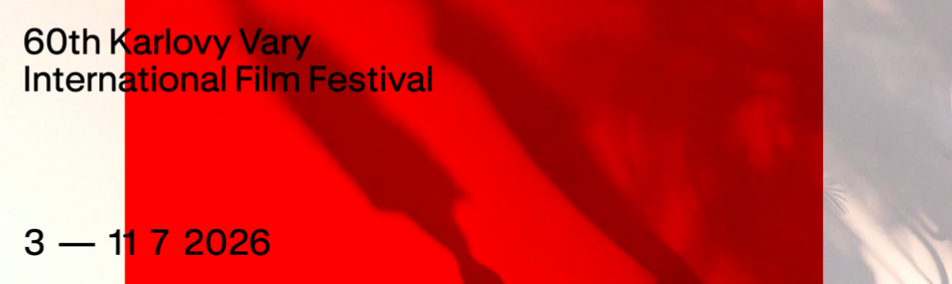
- In July 2026 we were at the 60th Karlovy Vary International Film Festival, after Beldocs in Belgrade, to get to know the audiovisual market of Central and Eastern Europe.
- One film there, A Sad and Beautiful World by Cyril Aris, tells thirty years of Lebanese history through a love story, and raises a question every producer of this kind of film has to answer: how do you put real history on screen?
- Archive footage needs a licence, but the licence covers only the footage. People recognisable in it and music heard in it are separate rights, and they have to be cleared too.
Updated after the festival.
What we found at Karlovy Vary
In July 2026 we spent the 60th edition of the Karlovy Vary International Film Festival in the Czech Republic, after a first stop in May at Beldocs, the Belgrade documentary festival. We went to meet producers, sales agents and distributors of Central and Eastern Europe, and to see how the market there actually works.
Karlovy Vary is elegant and very well run, but it is still largely built around its domestic audience: much of the industry programme is easier to follow if you speak Czech, and getting into screenings takes patience. For a foreign professional the lesson is a practical one. In this region relationships are built slowly, in person, and well before a project needs them.
A film made of history
The film that made the trip worthwhile was A Sad and Beautiful World, the first fiction feature by the Lebanese director Cyril Aris. It follows Nino and Yasmina, two children born in Beirut during the war, who lose each other and meet again as adults, and try to love each other as if life in Lebanon were normal. It is a love story set against thirty years of a country’s history.
A film like this raises a very concrete production question. Real history has to appear on screen somewhere: news broadcasts, archive footage, images of events everyone remembers. That material is one of the places where productions most often stumble, and it is worth looking at how Italian law treats it, because the same questions come up whenever a film with archive material is produced, co-produced or released in Italy.
Archive footage is protected, and it belongs to someone
The starting point is simple: archive footage is protected. If it is a creative work, it is covered by copyright. Even when it is not, Italian law gives the producer of any “sequence of moving images” a separate exclusive right over reproduction, distribution and making available, lasting fifty years from fixation or first publication (art. 78-ter of the Italian Copyright Act). A news clip from the 1990s is still protected today.
Using it in a film therefore requires a licence from whoever holds those rights: a broadcaster, an archive, a production company, sometimes the heirs of a camera operator. The licence has to say which images, for how long, in which territories and on which platforms: cinema, streaming, television, festivals. If the film is later released on a global platform and the licence covered only “theatrical, Europe”, the problem is not the archive’s. It is the producer’s.
The licence covers the footage, not everything in it
This is the part most productions forget. The archive licence covers the rights in the footage. It does not cover everything that appears in it.
Recognisable people in the images have their own rights over their likeness. Under Italian law a portrait cannot be shown without consent, except in specific cases: well-known people, public office, and images connected to events of public interest or that took place in public (art. 97 of the Copyright Act). Even then, the image cannot be used in a way that harms the person’s honour or reputation. News and historical footage often falls within those exceptions, but a narrative, commercial use in a fiction film does not automatically inherit the freedom of the original news report. Each recognisable person needs either a release or a serious assessment of the context.
The same goes for music heard in the background of the footage. The composition and the recording have their own rightholders, and the footage licence does not automatically include them.
What clearance means in practice
All of this has a name: clearance. It means going through every fragment that enters the edit and asking, for each one, who has to be paid, who has to sign and what has to be checked. In practice that means building a log of every archive clip with its source and licence terms, checking that the licensed territories and platforms match the distribution plan, identifying recognisable people and deciding where releases are needed, and clearing any music separately. It is far less romantic than the film, but the alternative is a cease-and-desist letter after the film is finished, or a distributor or E&O insurer refusing to go ahead.
If your project uses archive footage, clips or third-party images and involves Italy, our clip clearance service in Italy explains how we work, and our film and audiovisual practice covers the contracts around it.
Nino and Yasmina spend their lives trying to forget the war. Whoever produced the film had to do the opposite: recover it piece by piece and put their signature on every licence and release. The world remains sad and beautiful, in Beirut as in Karlovy Vary. At least it can be cleared.
FAQ
Is old news footage still protected in Italy?
Usually yes. Besides copyright on creative works, Italian law gives the producer of any sequence of moving images an exclusive right lasting fifty years from fixation or first publication (art. 78-ter of the Copyright Act).
Does an archive licence cover the people who appear in the footage?
No. The licence covers the rights in the footage. Recognisable people have their own image rights, and their consent is needed unless an exception applies, such as images connected to events of public interest (art. 97 of the Copyright Act).
Is the music in archive footage included in the licence?
Not automatically. The composition and the recording have their own rightholders and must be cleared separately.
What should an archive licence specify?
Which images, for how long, in which territories and on which platforms, such as cinema, streaming, television and festivals. It should match the film’s actual distribution plan.
Useful links
| Resource | Link |
|---|---|
| Clip clearance in Italy | DANDI.media service |
| Film & audiovisual practice | DANDI.media |
| Copyright protection | DANDI.media |
| Italian Copyright Act (Law no. 633/1941) | Normattiva |
| Karlovy Vary International Film Festival | kviff.com |
| Beldocs (Belgrade) | beldocs.rs |
Dandi Law Firm provides legal assistance in several Practice Areas. Check out our Services or contact Us!